How AI in Retail Industry Is Reshaping Retail Operations in 2026

Table of Content
Artificial intelligence has changed the retail industry in 2026. AI has led to tremendous growth in the retail and restaurant market. It has improved retailers’ operational efficiency, reduced costs, reduced checkout times, increased quick service, and enhanced the customer experience. Businesses are looking to rely on AI systems to analyze customer behavior and monitor workflows. Now, many retailers are exploring AI-powered technologies to drive business growth and profits.
The Global Artificial Intelligence in Retail Market is estimated to be valued at USD 18.40 Bn in 2026 and is expected to reach USD 130.88 Bn by 2033, exhibiting a compound annual growth rate (CAGR) of 32.4% from 2026 to 2033.
Let’s explore how AI is transforming the retail industry in 2026 and its benefits.
What does AI for Retail Mean?
AI for retail means using AI technologies like ML and NLP to improve retail operations. Retailers can use AI to automate processes, manage customer data, improve marketing, and deliver better shopping experiences.
AI helps retailers manage inventory, understand customer preferences, detect fraud, reduce operational costs, and more. It helps the business stay ahead of the competition in the retail market.
Key Benefits of implementing AI in the retail industry
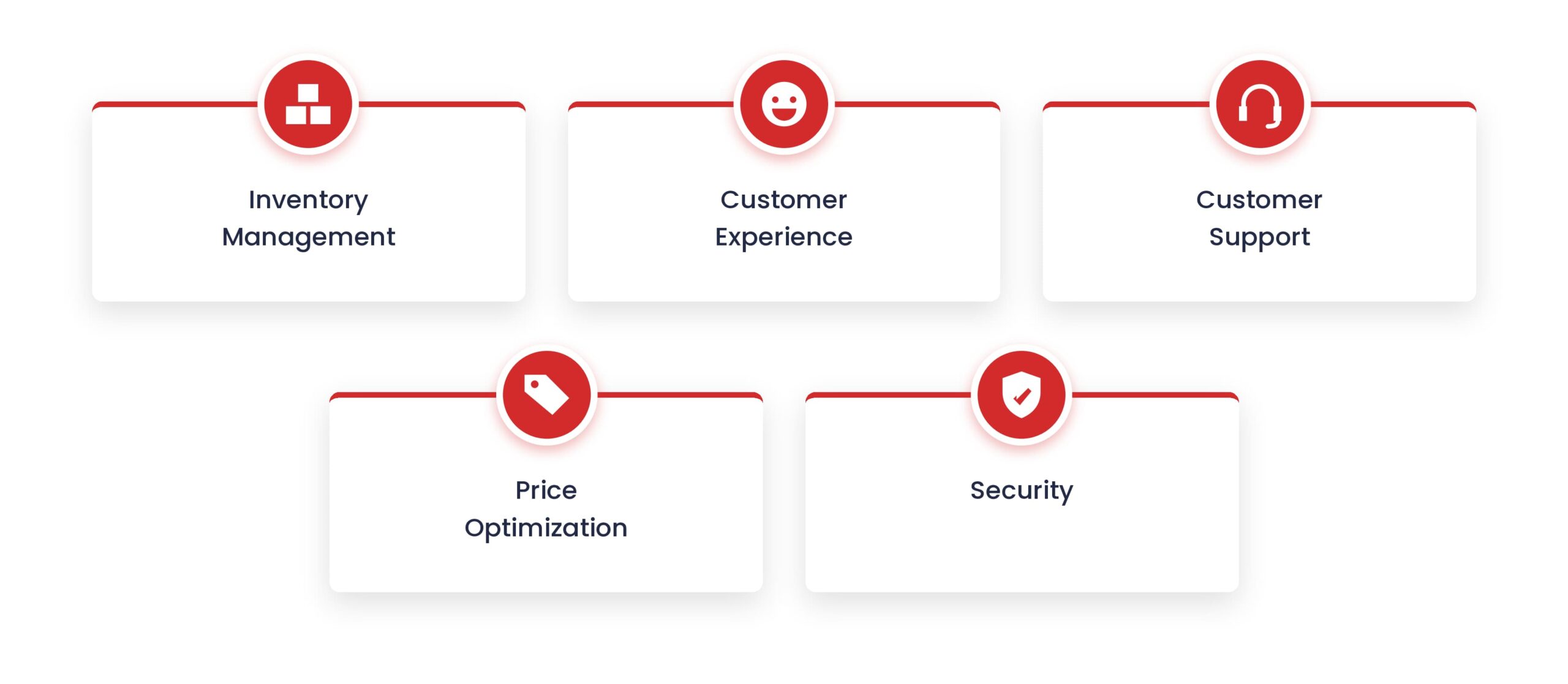
Here are some important benefits of implementing AI in retail operations:
1. Inventory Management
Inventory management is a crucial component of retail operations for all retailers. Overstocking and stockouts can be caused by inadequate planning and management. AI-powered inventory management benefits merchants in the following ways. The AI in inventory management market size has grown exponentially in recent years. It will grow from $9.54 billion in 2025 to $12.36 billion in 2026 at a compound annual growth rate (CAGR) of 29.6%.
2. Customer Experience
The implementation of AI helps retailers provide a personalized customer experience. It also analyzes customer behaviour and past purchases, which helps in providing product recommendations. 91% of customers are more likely to shop with brands providing personalized offers and recommendations.
Retailers can use AI capabilities like:
- AI allows retailers to track customer behavior and past purchases.
- Use customer data to make targeted marketing campaigns.
- AI gives customers personalized offers and promotions.
- It improves customer experience by understanding their preferences and needs.
3. Customer Support
AI implementation in customer support has transformed retail businesses, which are using chatbots and assistants to deliver personalized services. The chatbot market specifically is expected to reach $15.5 billion by 2028, growing at a CAGR of 23.3% from 2023.
These tools help retailers:
- Retailers answer customer queries using chatbots and assistants.
- It can manage all product-related queries and issues.
- It can assist retailers in customer order tracking and provide 24/7 support.
- In customer support, AI helps retailers manage all customer queries.
4. Price Optimization
As per a McKinsey study, using a dynamic price optimization strategy can increase profits by 10-20%. Retailers can easily enhance their pricing strategies with the market’s real-time conditions.
- AI in Retail helps change pricing in real time based on market demand.
- It helps you optimize your pricing strategies to boost conversions and maximize profits.
- Retailers can analyze customers’ past purchases to create offers and discounts.
- AI automates pricing updates by synchronizing pricing across online and physical stores.
5. Security
Fraud in retail businesses has grown across both online and offline channels. The global AI fraud detection market is projected to reach $31.69 billion by 2029, growing at a CAGR of 19.3%. So, artificial intelligence can be used to identify fraudulent transactions and suspicious activities.
- It helps retailers identify unusual transaction patterns in the retail store.
- AI security helps retailers identify suspicious activities and payment fraud.
- It can boost cybersecurity and reduce financial losses.
- It helps retailers protect digital payments and POS transactions by identifying fraudulent activity.

Implementation of AI in Retail Examples
1. AI-Powered Product Recommendations – Amazon
Amazon provides AI-powered recommendations to its customers by analyzing customer wishlists, carts, browser history, previous purchases, and more.
These recommendations for products can be seen as:
- Recommended for you.
- Frequently bought together.
- Related Product Recommendations
These recommendations help to increase:
- They improve customer engagement on product pages and product discovery.
- Encourage cross-selling and complementary purchases.
- Deliver more personalized shopping experiences.
- Create opportunities to increase average order value.
2. Walmart – AI-Powered Exit Technology
Sam’s Club, a membership-based retail division of Walmart, uses AI-powered exit technology to improve the shopping experience and streamline its checkout process
The smart checkout systems can:
- They use computer vision to verify that customers have paid for the items in their shopping carts.
- They eliminate the need for manual receipt and cart checks at store exits.
- They allow a quick and seamless checkout process.
- It allows employees to spend more time assisting customers.
3. Pinterest Lens Visual Search
Pinterest is a famous social media platform that uses AI-powered visual search technology called Pinterest Lens. The user can take a product pic, and the AI will identify similar products instantly. Visual search technology helps businesses enhance:
- It improves product discovery for customers.
- It allows retailers to personalize customer shopping experiences.
- It helps retailers to create more opportunities for product discovery and shopping.
4. Walmart Demand Forecasting
Walmart uses AI-powered predictive analytics to forecast customer demand in its retail stores. The analytics system analyzes customer data, seasonal trends, events, past purchases, and customer behavior. Predictive analytics helps retailers by:
- It helps prevent overstocking and out-of-stock issues.
- It enhances inventory planning and minimizes stockouts.
- It also increases product sales by ensuring its availability in the store.
Role of AI in transforming retail operations
AI technology is reshaping every aspect of retail operations in 2026.
1. Smart Retail Operations
AI implementation in the retail store makes operations seamless and automated for businesses.
- It automates real-time stock monitoring plus inventory management.
- It allows retailers to offer fast billing and checkouts.
- AI is used in retail operations to track sales and product performance.
2. Data-Driven Business Insights
Retailers using AI analytics provide valuable insights to make better data-driven decisions. They get visibility in various processes, such as:
- It provides analytics to help retailers understand purchasing patterns.
- It also tracks inventory and stock levels to avoid stockouts.
- It helps retailers increase revenue and understand sales trends.
3. Improved Omni-Channel Experience
Retailers serve various customers using multiple channels, such as online stores, in-store, and mobile applications. AI in retail allows businesses to:
- It allows businesses to engage in personalized interactions with customers.
- It helps businesses track customers’ shopping behavior and their preferences.
- It allows retailers to maintain accurate inventory across all retail channels with integrated inventory systems.
4. Staff Optimization
The AI implementation in retail helps businesses manage the workforce, improve productivity, and manage labor costs. It allows retailers to make valuable staffing decisions using the right resources.
- It allows retailers to enhance staff productivity through the right task allocation.
- Help retailers minimize overstaffing and understaffing problems.
- It helps retailers utilize past purchase data to forecast customer traffic and peak shopping hours.
Future of Artificial Intelligence in Retail Industries
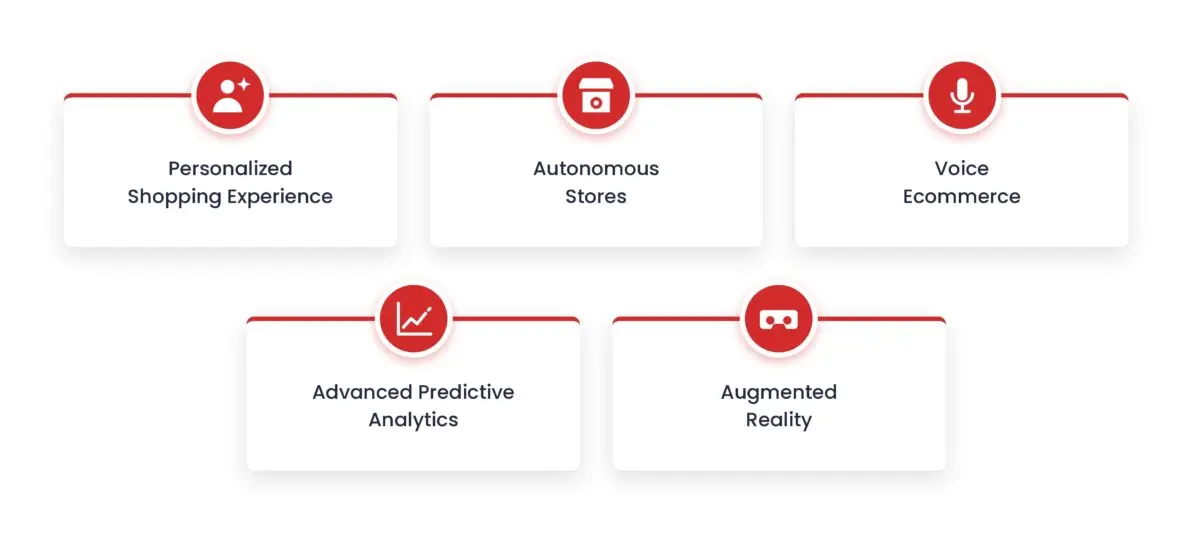
1. Personalized Shopping Experience
AI implementation personalizes the shopping experience for its customers by analyzing past purchases, behavior, preferences, etc. Loyalty rewards and discounts are a great way for retailers to grow their audiences.
- Retailers can provide AI-generated shopping suggestions.
- It can provide product recommendations as per customer interests.
- AI in retail can customize discounts and promotions.
2. Autonomous Stores
The future of AI in retail will be autonomous retail stores, including sensors, vision, and smart checkout technologies. With AI implementation, retailers help customers enhance the quick shopping experience.
- It allows customers to pick products and leave without using conventional checkout counters.
- Customers can enter stores without the need for checkout lines.
- During peak hours, businesses reduce waiting times.
3. Voice Ecommerce
Voice commerce is expected to become an increasingly important part of the retail shopping experience. The voice-enabled assistant will help customers purchase products, making it easier.
- It will help customers search for products online and place an order.
- It can easily help customers reorder frequently purchased items.
- It helps customers track deliveries and their order status.
4. Advanced Predictive Analytics
AI in retail will enable more accurate market forecasting of customer purchasing behavior. It will provide advanced predictive analytics that process large volumes of data and help retailers make valuable decisions.
- AI helps predict product demand using historical sales and market data.
- It provides marketing trends by season or month, helping retailers plan their sales strategies.
- It creates pricing strategies based on demand, competition, inventory, and customer behavior. This helps businesses manage products efficiently.
5. Augmented Reality
The combination of augmented reality and AI will take the customer shopping experience to the next level. It will make customers visualize the products before purchase.
- It will allow customers to try clothes or accessories virtually.
- It will allow customers to view and examine furniture and decor in homes virtually.
- It will help customers explore product demos virtually.
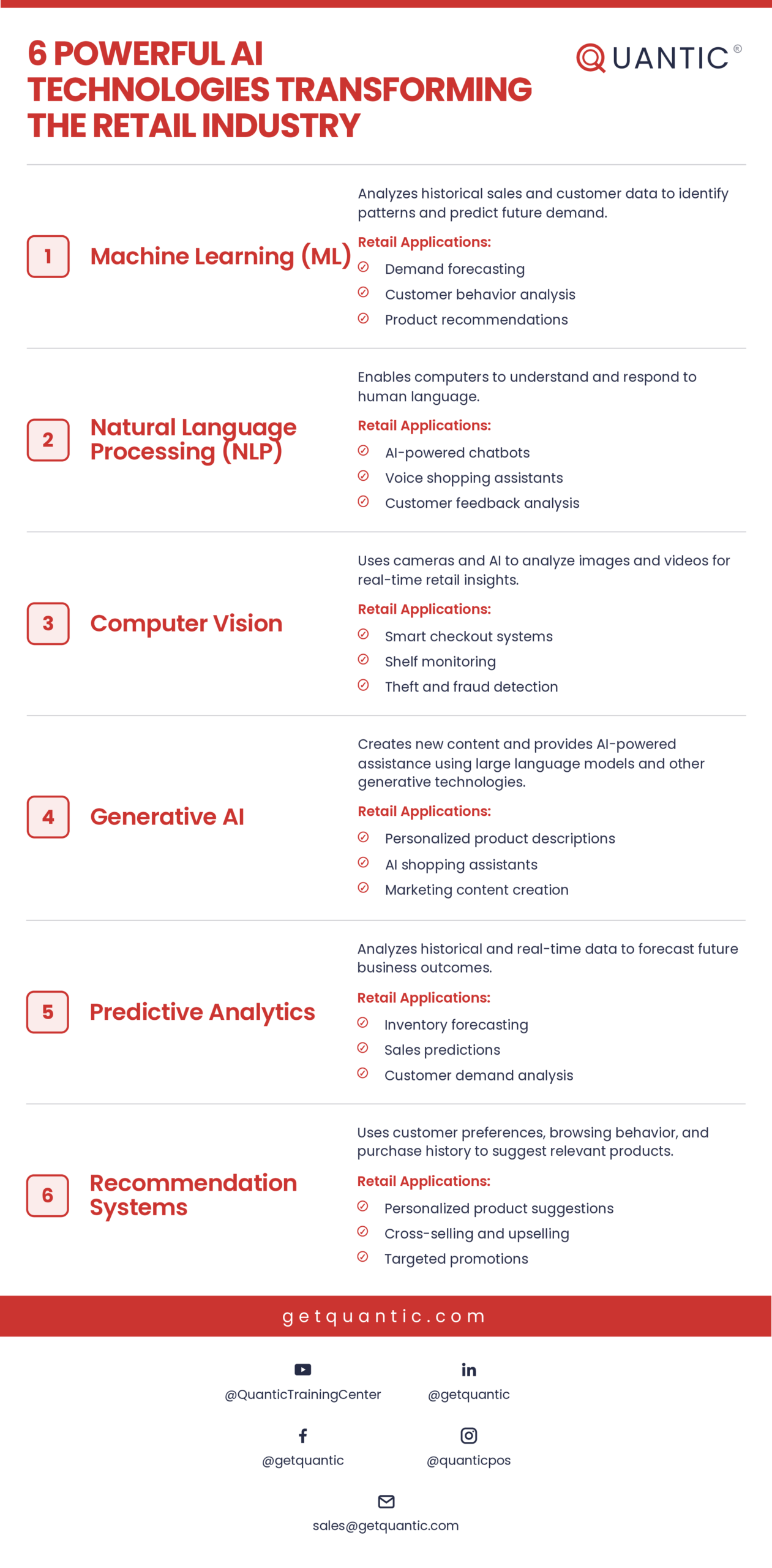
6 Powerful AI Technologies Transforming the Retail Industry
 Cash Discount Program: What It Is and How to Implement It