What is a Counter Service Restaurant? The Ultimate Guide for Diners

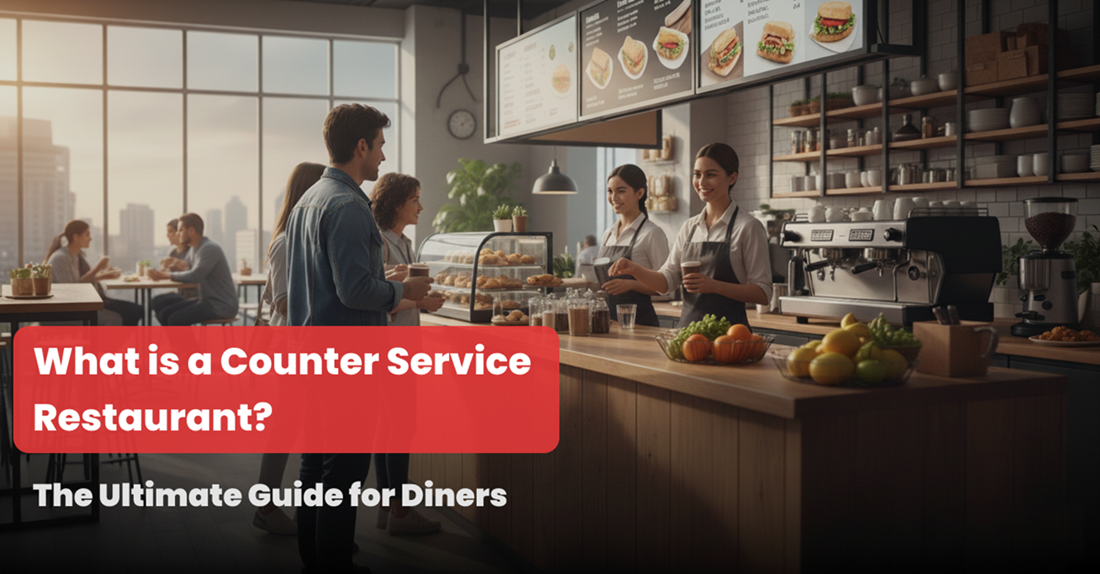
Table of Content
- What Is a Counter Service Restaurant?
- Key Characteristics of a Counter Service Restaurant
- Counter Service vs. Full Service: What’s the Difference?
- Why Counter Service Restaurants are Gaining Popularity in the Market
- Pros and Cons of a Counter Service Restaurant
- Technology and Counter Service Restaurants
- What makes Counter Service Restaurants Run Effectively
- Why Quantic POS is the Best Choice for Counter Service Restaurants?
- Final Thoughts
- Frequently Asked Questions
When you enter a restaurant, you will analyze the first thing: the way food is ordered, prepared, and served. The entire dining experience is shaped by the way a restaurant serves its customers, whether it’s a traditional sit-down restaurant, a fast-casual establishment, or a food truck. The counter-service restaurant model has grown in popularity recently.
In this extensive guide, we’ll cover what a counter-service restaurant is, how it operates, why it’s popular, and what operators should know before adopting this business model. Explore everything about this style of dining right here, whether you’re a restaurant owner, manager, or just curious about it.
What Is a Counter Service Restaurant?
A counter-service restaurant is a dining establishment where customers place their order and pay at a counter rather than receiving traditional table service. Customers approach the counter to select their items and pay up front. After ordering the service, follow one of the two models:
- Pick-up model: Guests wait at the counter or a designated area, collect food and beverages when ready, then carry their order to a table.
- Hybrid model: Guests receive a number or buzzer, and staff deliver the meal to their table once it’s ready.
Unlike full-service restaurants, counter-service restaurants don’t offer table-side ordering or payment. This model minimizes wait-staff requirements and allows quick service.
You’ll commonly find counter service models in:
- Fast-casual restaurants.
- Cafés and coffee shops.
- Food halls and food courts.
- Quick-service restaurants (QSRs).
- Bakeries, sandwich shops, and delis.
Key Characteristics of a Counter Service Restaurant
Counter-service restaurants are primarily known for their speed and quick service. This type of model works with fast-casual and quick-service restaurants. There are various characteristics of counter-service restaurants.
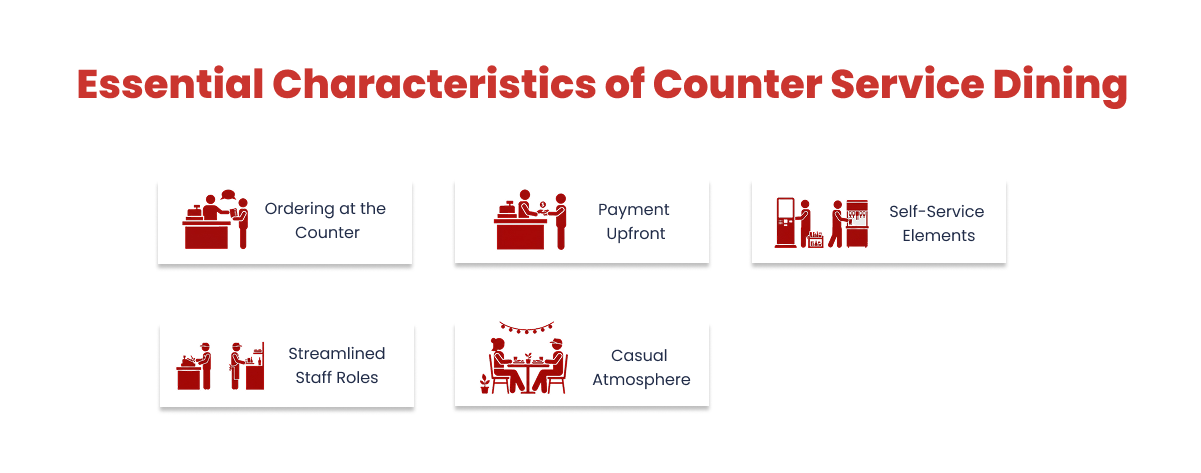
1. Ordering at the Counter
In counter-service restaurants, guests order their food at the counter or ordering point. The guests place their orders instead of being served at the table.
- The customer places their food orders with the server or cashier at the counter.
- In this method, customer can place their order using QR code menus, mobile ordering, or self-service kiosks.
- The counter orders streamlines the ordering process, enhances order accuracy, and reduces wait times, providing guests with a valuable dining experience.
2. Payment Upfront
The upfront payments method differs from the traditional sit-down restaurants.
- Customers pay for their orders when they place them. They don’t need to pay after the meal.
- Simplifies billing by reducing the use of split checks and manual tip calculation.
- It manages the cash flow security of your businesses by minimizing table service billing.
3. Self-Service
In quick service restaurants, self-service kiosks reduce the wait times by 40% – it’s a game-changing improvement during peak hours. The diners get involved in the counter service restaurants, which include:
- In this self-service, the guest takes their own napkins, cutlery, and drinks.
- This model encourages quick service, reduces labor costs, and provides full freedom for diners.
- Some restaurants allow customers to put away their plates and cutlery they used.
4. Staff Management
The restaurant staff has become more specialized and efficient in counter-service restaurants. They have reduced the waiter staff’s responsibilities. Quick service restaurants have experienced over 130% staff turnover annually, highlighting the need for efficient staff management.
- This model enables restaurants to manage guests during peak hours.
- With this model, a few staff members are needed to run restaurants, maintaining the speed and quality of service.
- Staff members focus on taking orders and food preparation instead of serving tables.
5. Casual Atmosphere
In counter-service restaurants, it is important to have a friendly and relaxed atmosphere. As per the consumer report, around 63% of diners say atmosphere and overall experience are the top factors when dining out.
- The counter-service restaurants handle a wide range of customers, which includes families, office workers, and more.
- This restaurant has a simple decor and seating that promotes shorter visits.
- Many counter-service restaurants also focus on providing high-quality meals with convenient seating.
Counter Service vs. Full Service: What’s the Difference?
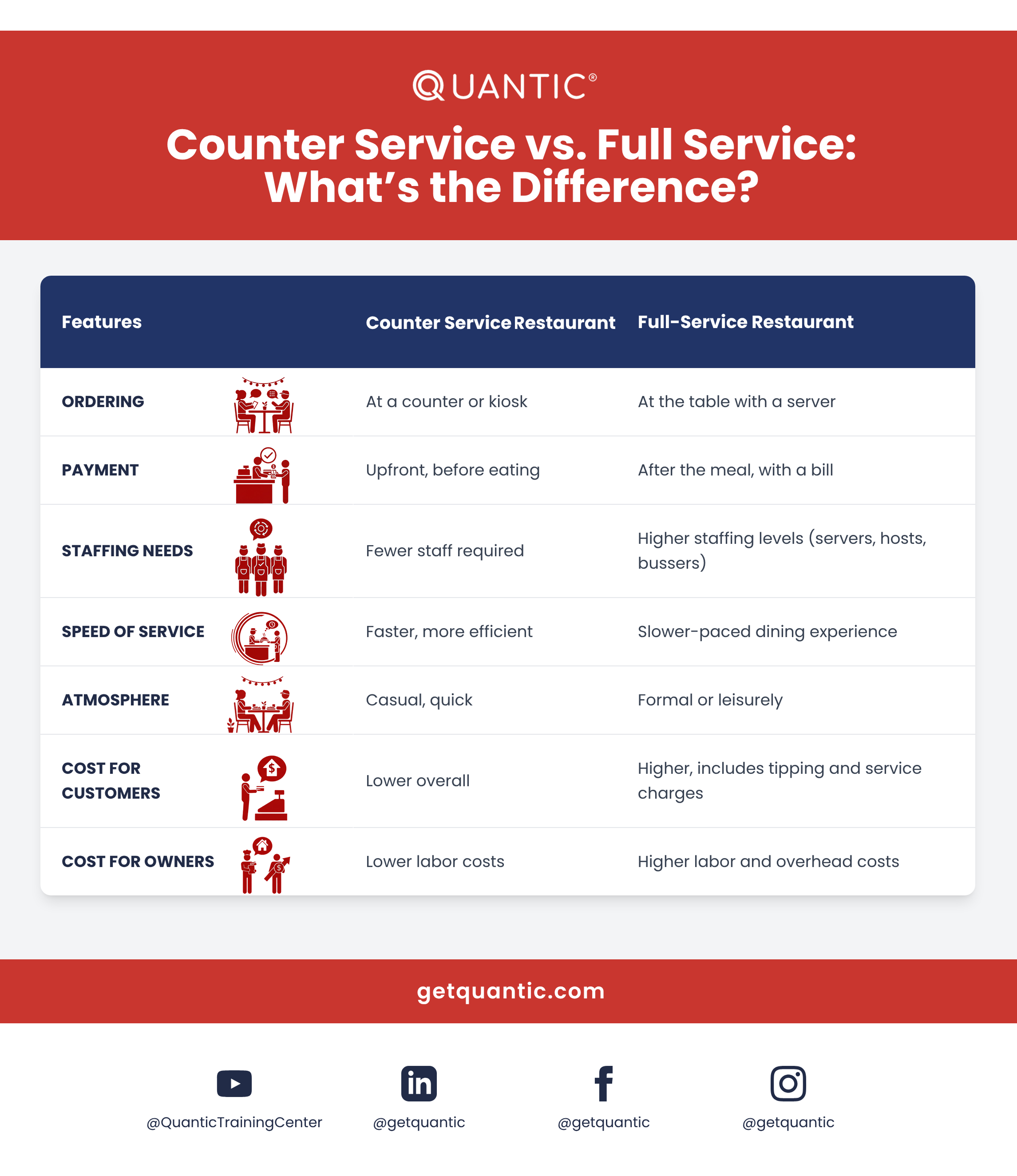
Why Counter Service Restaurants are Gaining Popularity in the Market
1. Changing Guest Preferences
- It is highly flexible and caters to a wide range of dining needs, which includes family casual outings and solo diners.
- The guests don’t want to spend a lot of time sitting for a meal due to busy schedules. They want fast-in and fast-out dining like counter-service restaurants without affecting food quality.
- With rising food expenses, guests are focusing on low-cost dining and paying in advance, avoiding the tips.
2. Ongoing Labor Challenges
Staff shortages can impact the restaurant industry, making counter-service restaurants more scalable.
- With counter-service restaurants, you require fewer FOH employees when compared with normal table service.
- With limited hiring, restaurants can maintain service quality with a short team.
- This model improves the restaurant’s productivity, including essential tasks such as food preparation, order handling, and cleanliness.
3. Lower Overhead Costs
The counter-service restaurant model is very cost-effective from a business viewpoint.
- A few staff members can help you lower labor costs in this model.
- With upfront payments, it helps to know accurate revenue and minimize losses.
- The counter-service restaurant requires small spaces and fewer decorations, which reduces initial investment.
4. Hybrid Model
The difference between full-service restaurants and fast-casual restaurants is operational.
- This model targets customers who value quality food and a dining experience.
- This model combines table delivery and counter orders, ensuring quick service with quality food.
- It offers menus featuring healthy food to modern diners.
Pros and Cons of a Counter Service Restaurant
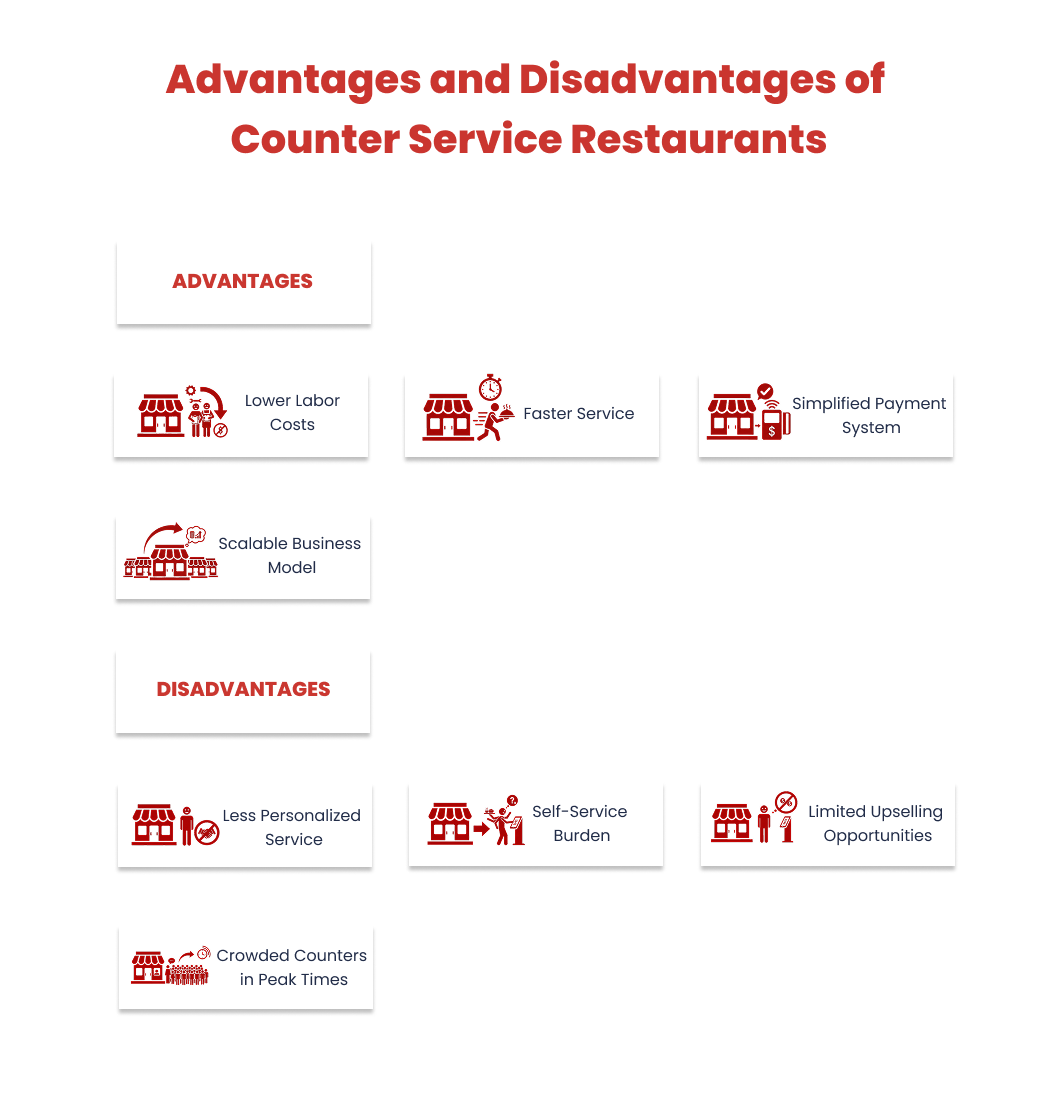
Advantages
Lower Labor Costs
In counter-service restaurants, there is less of a requirement for staff. It means the payroll cost will be reduced, and it is beneficial at a time of growing wages. The staff will focus on cleaning, processing orders, and preparing food.
Quick Service
In this method, the meal is counter pick-up or table delivery, saving the diners’ time. Families who need quick meals but don’t want to sacrifice food quality can benefit from it.
Seamless Payments
In this model, payments are made at the upfront payment counter or using kiosks. Customers benefit from a simple payment experience, as this reduces the need to calculate tips or delay billing.
Scalable Model
With the counter-service restaurant model, it is easier to open more locations. It is designed for franchising or chain expansion, reducing the staff needs.
Disadvantages
Less Personalized Service
The disadvantage of this model is the loss of personalization and friendliness in restaurant services that full-service restaurants offer. This model is not for guests who are looking for a relaxed and planned dining experience.
Self-Service Burden
In this model, guests need to have self-service, like picking up utensils, condiments, and more. The guest who prefers a dining environment will find this inconvenient or less appealing.
Limited Upselling Opportunities
Full-service restaurants upsell desserts, drinks, and appetizers, while in counter-service restaurants, these upselling opportunities are limited, which leads to less direct staff interaction.
Counters During Peak Times
In this model, long lines at the counter during peak hours may irritate the guests. The customer experience will suffer when proper planning is not followed, such as mobile ordering, queue management, multiple order points, and more.
Technology and Counter Service Restaurants
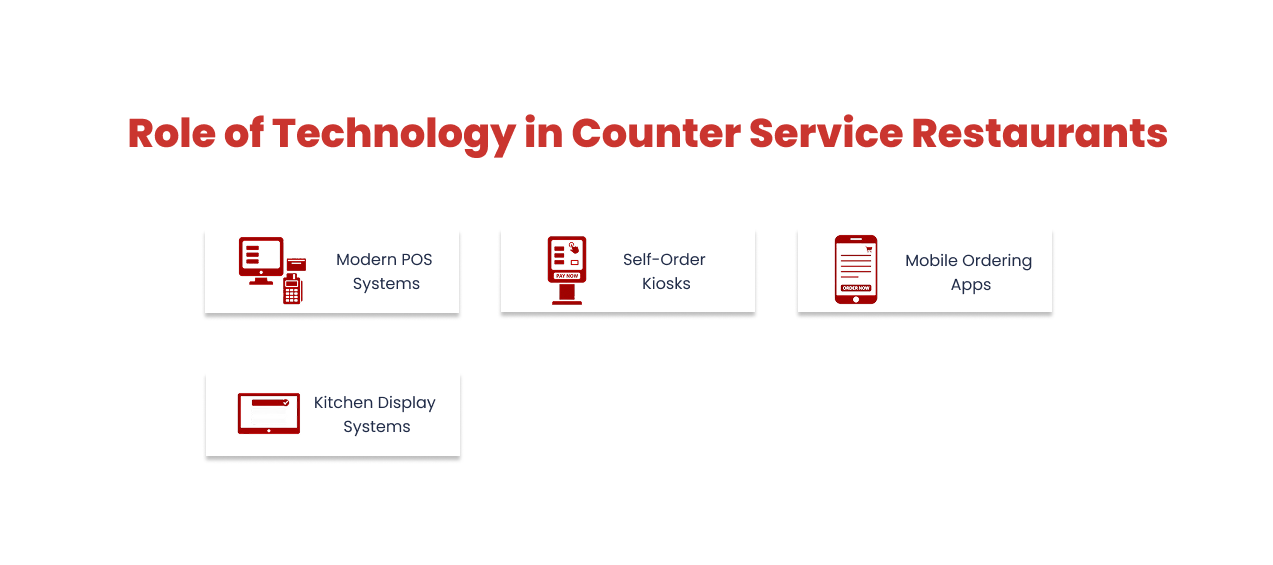
1. Flexible POS Systems
The POS market is growing rapidly and is expected to reach $33.41 billion in 2026, increasing the demand for flexible POS systems like Quantic POS.
- With our cloud-based POS, operators can easily access real-time sales data and build data-driven decision-making.
- Quantic POS manages inventory management, employee management, loyalty programs, and more.
- It ensures quick checkouts and higher customer satisfaction using various payment methods.
2. Self-Order Kiosks
As per Technomic, a food service research and consulting firm, average orders at kiosks are 15% higher at fast-casual restaurants and 8% higher at quick-service restaurants.
- Counter-service restaurants use self-ordering kiosks to enhance their restaurant operations, food preparation, and service quality.
- Self-ordering kiosks in counter service allow customers to order and customize their meals.
- It has integrated payment options that enable quick and secure transactions.
3. Mobile Ordering
Restaurants using online and mobile ordering systems have seen 23% increase in average order value, driven by easy customization and upselling.
- Counter-service restaurants can customize their orders, menus, and promotions utilizing data-driven insights.
- In this restaurant model, the guests can place their orders without waiting in the long queues during peak hours.
- Counter-service restaurants encourage repeat visits by providing seasonal offers and deals.
4. Kitchen Display Systems (KDS)
As per reports, restaurants using the Kitchen Display System have seen 25% reduction in order errors, enhancing service quality.
- Using KDS in counter-service restaurants reduces order errors as customer orders are sent directly to the kitchen.
- KDS allows seamless counter-service restaurant operations during the peak hours.
- Using KDS, restaurant staff can manage customer orders, prep times, and coordinate among KDS screens.
What makes Counter Service Restaurants Run Effectively
- To ensure that customers know where to start, start with an effective layout that specifies ordering, pickup, and self-ordering zones.
- Now, concentrate on staff training by giving your restaurant employees a variety of responsibilities, such as cashiering and food preparation. This facilitates faster service and fewer mistakes.
- To simplify your everyday restaurant operations, make use of modern technology like POS systems, self-ordering kiosks, and mobile POS.
- To help customers understand menus and orders, use digital signs and make the menu more visible.
- Next, hospitality, like clean dining, stocked self-ordering kiosks, and friendly staff, boosts customer satisfaction and repeat visits.
- At last, optimizing the takeout and delivery process, which includes pickup, packaging, and online ordering, results in seamless restaurant operations.
Why Quantic POS is the Best Choice for Counter Service Restaurants?
1. Quick Order Processing
When we examine counter-service restaurants, we see that they rely entirely on speed and quick service. Our Quantic POS is specifically designed for fast services and allows you to serve more guests during peak hours. It enables:
- Quick order entry.
- Fast billing and checkouts.
- Reduced long queues and waiting times.
2. Seamless Kitchen Workflow (KDS integration)
- Reduce manual errors and miscommunication.
- Quick order preparation.
- Direct order flow to KDS (kitchen display system)
3. Easy to Use UI
- Staff can train and learn quickly
- Minimize onboarding time and mistakes.
- Simple and easy-to-use user interface.
4. Cloud-Based Solutions
- Real-time sync across devices.
- Manage multiple restaurants with a single dashboard.
- Access orders, sales, and reports from any location.
5. Fast Payments
- Provides quick transaction processing.
- Supports multiple payment methods.
- Provide quick checkouts at the counter.
Final Thoughts
Counter-service restaurants are flexible service models that focus on providing affordable, efficient, and quick service meals. That’s where Quantic POS comes in, designed specifically for high-volume and fast-service restaurants.
Many restaurants are choosing counter-service models because they provide quick service, affordability, and seamless integration. Whether you are a well-established operator or an entrepreneur, the counter service model helps restaurants to grab opportunities to grow and succeed in the industry.
Quantic POS makes your restaurant operations seamless, reduces long queues, and provides excellent customer experiences.
If you are looking to supercharge your counter service restaurants, then you can get started with Quantic POS today and transform your every order into smarter, quicker, and more profitable experiences.